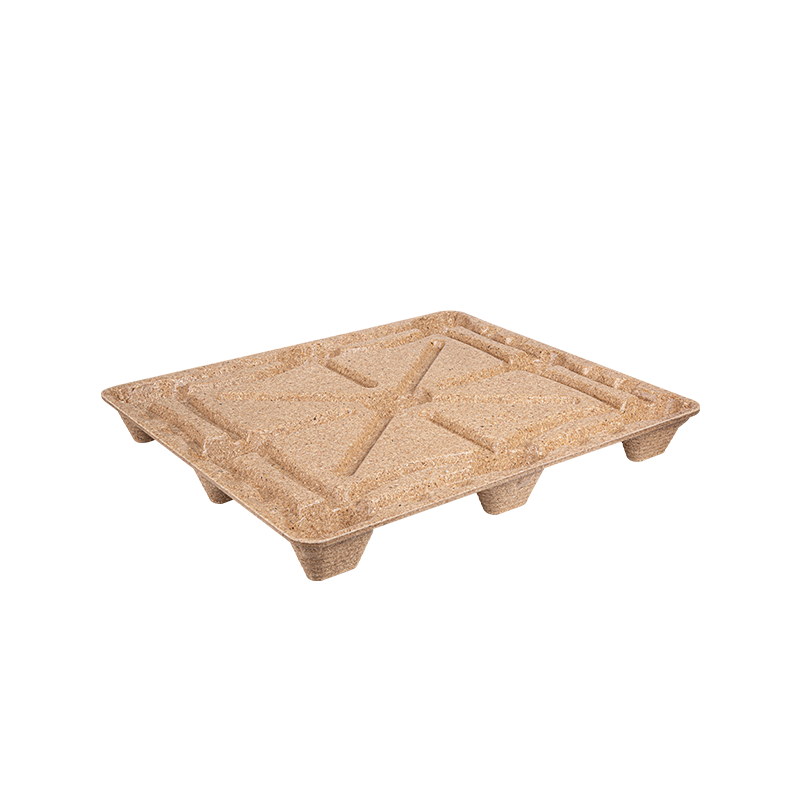
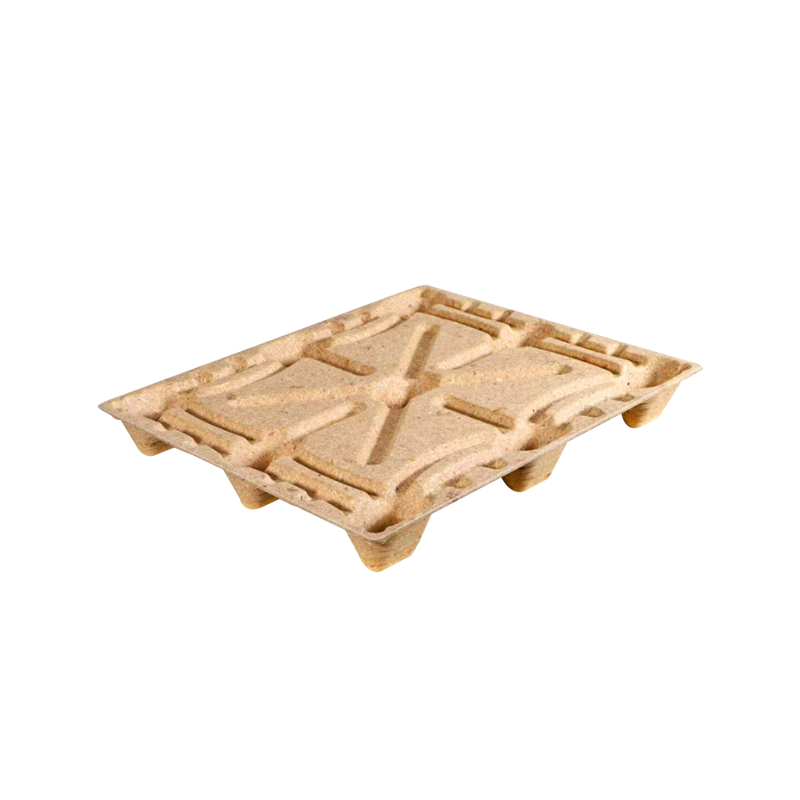
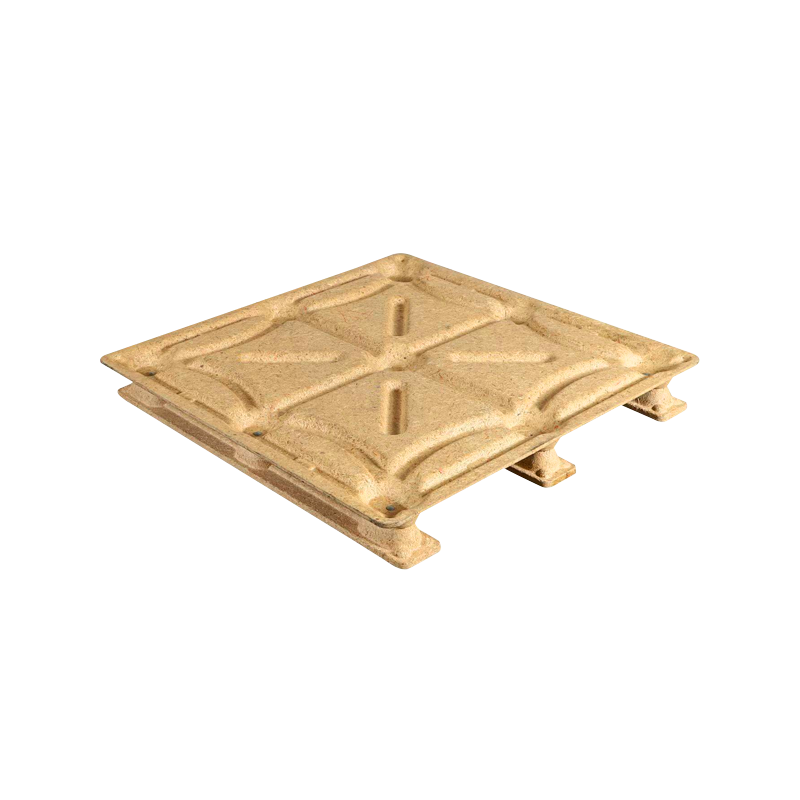
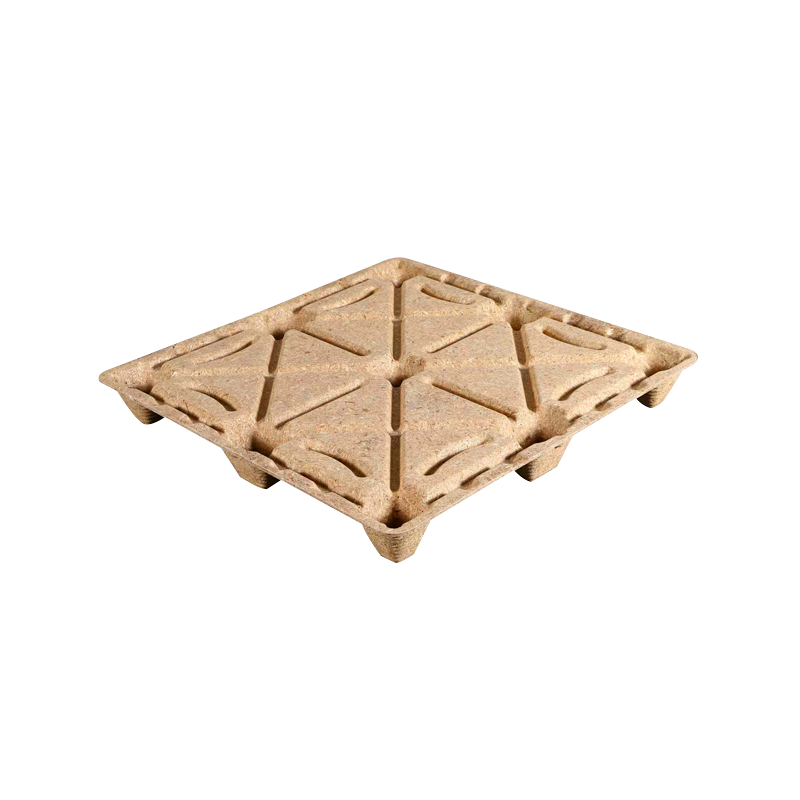
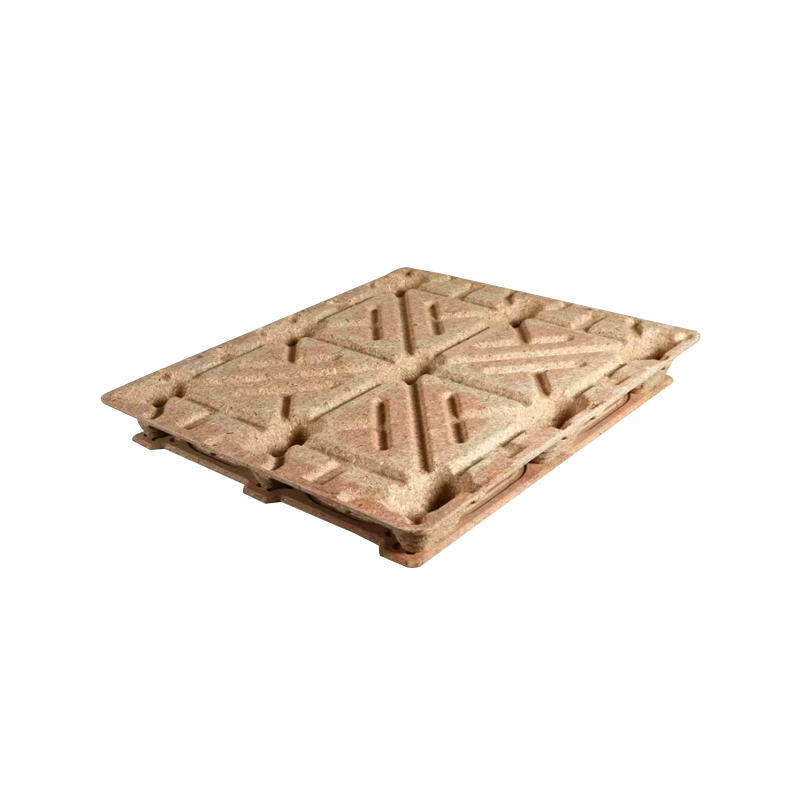
Sawdust, wood shavings, trimming waste and other residues are generated every day by sawmills, furniture factories and wood-processing plants. Once treated mainly as low-value by-products, suitable wood residues are increasingly being recovered as industrial raw materials. One important application is molded wood pallets, where prepared wood fibers are combined, formed and pressed into engineered structures for warehousing, manufacturing and international logistics.
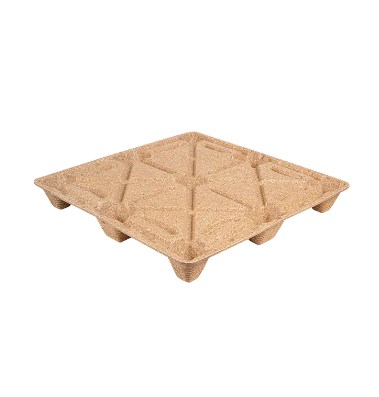
The change represents more than simply finding another use for waste. Turning variable wood residues into a reliable logistics pallet requires controlled feedstock selection, contamination removal, particle preparation, moisture management, molding technology and finished-product testing. As industrial packaging moves toward more efficient use of materials, this waste-to-resource model is attracting greater attention across global supply chains.
From residue to resource: The real value of wood-waste recovery comes from converting inconsistent industrial by-products into standardized materials that can deliver repeatable packaging performance.
Where Industrial Wood Residues Come From
Industrial wood residue is a broad term. It can include relatively clean manufacturing by-products as well as mixed recovered wood that may contain coatings, fasteners, plastics or other contaminants. These streams should not be treated as interchangeable.
For molded fiber products, manufacturers generally prefer relatively consistent wood-processing residues. Common sources include sawdust from cutting operations, planer shavings, wood chips, lumber trimming waste, furniture-production offcuts, packaging-production scraps and selected clean residues from panel or woodworking operations.
Typical Usable Sources
- Sawmill sawdust
- Planer shavings
- Clean lumber offcuts
- Wood chips and trimming waste
- Furniture manufacturing residues
- Packaging-production scraps
Materials Requiring Greater Control
- Painted or coated wood
- Chemically treated timber
- Demolition waste
- Wood mixed with plastics
- Material containing metal fasteners
- Oil- or chemical-contaminated waste
A useful distinction is between pre-consumer residues, generated during industrial production before a finished product reaches the user, and post-consumer recovered wood, collected after use. Pre-consumer residues are often easier to standardize because their origin and previous treatment are better known.
This distinction matters because a molded pallet manufacturer does not simply need “wood waste.” The manufacturer needs a controlled fiber feedstock with acceptable moisture, particle size, cleanliness and composition.
From Wood Residue to Moldable Fiber
Collection is only the beginning of the recycling process. Before industrial wood residues can be molded into a structural product, they must be converted into a consistent material that can flow into a repeatable manufacturing process.
Collection → Sorting → Metal Removal → Crushing → Screening → Drying → Conditioning
Sorting removes unsuitable material before it enters size-reduction equipment. Magnetic separation or other inspection methods can help detect nails, screws and metallic fragments. The remaining wood is crushed or milled into controlled particles and then screened to reduce excessive variation in particle size.
| Control Point |
Why It Matters |
| Contamination |
Metal, plastic, stone or unsuitable wood can damage equipment or reduce product consistency. |
| Particle distribution |
Influences packing, binder distribution, surface quality and molded density. |
| Moisture content |
Affects curing, pressing behavior, dimensional stability and cycle consistency. |
| Feedstock consistency |
Reduces performance variation between production batches. |
| Binder distribution |
Supports consistent bonding throughout the molded structure. |
Moisture is particularly important. Feedstock that is too wet can require additional drying energy and interfere with molding or curing, while excessively dry material may behave differently during blending and pressing. Manufacturers therefore commonly establish an acceptable processing window rather than treating moisture as an uncontrolled property of the waste stream.
This preparation stage explains an important point about industrial recycling: recycling technology is not only about recovering material—it is about controlling material variability.
How Recovered Wood Fiber Becomes a Molded Logistics Pallet
Once the recovered fibers have been prepared, they can be blended with an appropriate binder and introduced into a mold. Controlled quantities of material are distributed across the mold before heat and pressure consolidate the mixture into the final pallet geometry.
01Fiber PreparationClean and size the recovered material.
02Binder MixingDistribute the bonding system consistently.
03Mold ChargingControl material quantity and distribution.
04Hot PressingApply controlled temperature and pressure.
05Curing & CoolingStabilize the molded structure.
06InspectionCheck dimensions and finished performance.
Mold geometry plays a major role in pallet performance. Ribs can increase stiffness without making the entire pallet uniformly thicker. Feet must support concentrated loads, while fork-entry areas need to withstand repeated interaction with material-handling equipment. Corners and transitions between thick and thin sections also need careful design to avoid stress concentration.
Density is another engineering variable. Simply increasing density does not automatically produce the most efficient pallet. Higher density can increase material consumption and pallet weight, so manufacturers must balance structural performance, unit weight, cycle time and raw-material utilization.
Recycled feedstock does not automatically mean lower performance. Finished pallet performance depends on feedstock preparation, formulation, mold design, process control and verification of the final product.
This ability to form prepared fibers directly into a defined shape is one of the reasons wood-processing residues can move beyond low-value disposal or energy recovery and become engineered logistics products.
Can Pallets Made From Wood Residues Meet Industrial Load Requirements?
For logistics buyers, recycled content matters only if the finished pallet can safely perform its intended job. Pallet strength should therefore be evaluated according to the complete pallet design and the conditions in which it will be used.
Important variables include static loading, dynamic handling, bending, compression, fork entry, impact resistance, stacking conditions and exposure to moisture. Racking applications require particular attention because a pallet supported only at selected edges behaves differently from one resting on a warehouse floor.
ISO 8611-1:2025 provides test methods for evaluating new flat pallets and organizes the methods into nominal load testing, maximum working load testing and durability comparison testing. The standard also notes that load-capacity tests do not replace field testing of specific pallet designs under their actual operating conditions.
| Buyer Question |
What Should Be Verified? |
| How much load can the pallet carry? |
Load rating under clearly defined support and loading conditions. |
| Can forklifts handle it repeatedly? |
Fork-entry geometry, pallet stiffness and handling durability. |
| Can loaded pallets be stacked? |
Compression behavior of the deck, feet and load-bearing areas. |
| Can the pallet be used in racks? |
Specific rack-support configuration and validated pallet design. |
| Will humidity affect performance? |
Material conditioning and performance under expected storage conditions. |
| Will every batch perform consistently? |
Raw-material QC, dimensional inspection and periodic load testing. |
As a result, a single statement such as “2,000 kg load capacity” has limited value unless the supplier also specifies whether the number refers to static, dynamic or another defined test condition.
Why Logistics Is Creating a Second Life for Wood Residues
Industrial logistics offers a particularly interesting destination for recovered wood fibers because pallets are used in large volumes across factories, warehouses, ports and distribution centers. Converting suitable residues into pallets can therefore connect waste recovery directly with another part of the industrial supply chain.
Turning Manufacturing By-Products Into Transport Packaging
Woodworking residues may previously have been disposed of, burned for low-value energy recovery or used in relatively low-value applications. When the material meets appropriate input requirements, engineered molding creates an opportunity to move the feedstock further up the value chain.
Nestable Pallets Can Reduce Empty Storage Volume
Molded pallet geometry can also be designed so that empty pallets nest into one another. This can reduce the volume occupied by empty pallets in warehouses, trucks or containers compared with pallet designs that cannot be deeply nested.
For companies handling large quantities of empty pallets, the economic and environmental effect can extend beyond the pallet material itself. Lower storage volume and more efficient transportation can affect warehouse utilization, empty-pallet movements and overall logistics costs.
Molded Geometry Supports Dimensional Repeatability
Because the pallet shape is created by a mold, key dimensions can be reproduced consistently when raw materials and processing conditions are properly controlled. This can be useful for forklift handling, conveyors, stretch-wrapping equipment and other mechanized material-handling systems.
Compatibility should still be verified against the specific warehouse system. Automated storage and retrieval systems, for example, can impose tighter requirements for pallet deflection, dimensions and support geometry than conventional floor storage.
Processed Wood Has Important Implications for Export Logistics
International shipments also raise phytosanitary considerations. ISPM 15 applies to wood packaging material such as conventional pallets, crates and dunnage that can provide a pathway for forest pests. However, the standard exempts packaging made wholly from processed wood materials created using glue, heat or pressure, or a combination of those processes.
This distinction can be relevant to molded wood packaging. Buyers should nevertheless confirm how the specific pallet is constructed and check applicable requirements in the destination country rather than assuming that every product containing recycled wood automatically falls under an exemption.
What Makes Wood-Waste-to-Pallet Recycling Economically Viable?
Wood residue may have a relatively low initial value, but low-cost feedstock does not automatically create a low-cost finished pallet. The economics depend on the entire conversion process.
Feedstock
Availability, collection radius, cleanliness, moisture and usable yield.
Processing
Sorting, crushing, drying, binder consumption, energy and labor.
Manufacturing
Mold investment, pressing cycle, reject rate, maintenance and throughput.
Logistics
Pallet weight, nesting ratio, storage space, transport distance and disposal.
Potential Residue Value Material Substitution + Avoided Waste Cost + Logistics Value − Processing and Manufacturing Cost
Feedstock consistency is a major economic factor. A very cheap waste stream can become expensive if it requires intensive sorting, drying or removal of contaminants. By contrast, relatively clean residues located near the manufacturing plant can reduce both preprocessing requirements and transportation.
The finished pallet design also influences the calculation. A lightweight or nestable pallet may generate savings farther downstream through reduced storage requirements or improved transport utilization. For procurement teams, the meaningful comparison is therefore total logistics cost rather than recycled-material price alone.
From Industrial Residue to Engineered Logistics Product
The growing reuse of industrial wood residues illustrates how circular manufacturing can work in practical supply chains. The objective is not simply to compress waste into another shape. Successful reuse requires suppliers to identify suitable feedstocks, remove unwanted materials, control particle and moisture characteristics, engineer the molding process and verify the performance of the finished pallet.
When these steps are managed properly, sawdust, shavings and other suitable wood-processing residues can become useful raw materials for industrial transport packaging rather than remaining low-value waste streams.
For manufacturers and exporters, molded wood pallets provide one example of how recovered plant fibers can be transformed into standardized logistics equipment while also offering design possibilities such as integrated structures and nestable empty-pallet configurations.
Looking for Molded Wood Pallets for Industrial Logistics?
Ronsun Import & Export Co., Ltd. supplies molded wood pallet solutions for manufacturing, warehousing and international shipping. Pallet specifications can be evaluated according to required dimensions, cargo weight, handling methods, storage conditions and destination markets.
Discuss Your Pallet Requirements
Frequently Asked Questions
What types of industrial wood residues can be used to manufacture molded wood pallets?
Potential raw materials include sawdust, planer shavings, clean lumber offcuts and selected residues from furniture, packaging and woodworking production. Suitability depends on contamination, moisture, particle characteristics and previous chemical treatment.
How is waste wood processed before it becomes a molded pallet?
Typical preparation includes collection, sorting, removal of contaminants and metal, crushing, screening, moisture adjustment and blending. The prepared material can then be mixed with a binder and formed under controlled heat and pressure.
Are pallets made from recycled wood fiber strong enough for industrial logistics?
They can be engineered for industrial applications, but performance depends on pallet geometry, fiber preparation, density, formulation and manufacturing control. Buyers should evaluate the finished pallet according to its intended load and handling conditions.
How are molded wood pallets tested for load performance?
ISO 8611-1:2025 provides internationally recognized methods for nominal load, maximum working load and durability testing of new flat pallets. Field validation may also be necessary for specific pallet designs and operating environments.
Do molded wood pallets need ISPM 15 treatment?
ISPM 15 exempts packaging made wholly from processed wood material created using glue, heat or pressure, or a combination of these processes. Buyers should confirm the construction of the actual product and the import requirements of the destination market.
What happens to molded wood pallets at the end of their service life?
Possible pathways may include reuse, material recovery, energy recovery or disposal depending on pallet condition, binder composition, contamination and the recycling infrastructure available in the local market.
 English
 Français
 Español
 عربى
عربى